Questions On Early Cell Membranes
One biological thing that I am drawn to is membranes. Cells are made of membranes, but I'm curious how these membranes were formed in the origins of life.
What physical process gave them the structure that they need so that the right things can come in and out? Why is this a good design for a living thing? I like these questions about membranes because having a partition between two physical spaces reminds about thermodynamics. In thermodynamics, we try to reason about a system that is surrounded by a thermal bath, which is the same setup that we have with a cell in water!
I am a complete beginner to biology and biochemistry, and here are some questions I had about cell membranes. I got a lot of these questions from reading Lane & Martin (2012).
How does stuff cross cell membranes?
Terms I don't really understand:
What does chemiosmotic mean?
How do ion gradients work?
What does exergonic mean?
What is the physical basis of protons being a through membranes?
Presumably its just the acid-alkali gradient but how can I put numbers on this?
Suppose there's a membrane with acid on one side and alkaline on the other.
How fast do protons transfer through the membrane?
What is the voltage involved?
How could I calculate the 'speed' of stuff going through?
What is the rate / flux of protons going through?
Is there a necessary speed of proton transfer required for life?
Since protons are quantum how does this even work?
Don't really understand the chemistry here, pretty blurry to me.
What's all this business with sodium ions being able to pass through membranes as well?
What exactly goes through cell membranes?
I see that that main charge loading thing could either be sodium ions or protons. I get protons, but why sodium ions?
Are there any other things that can go through, what are the conditions?
What was the original membrane?
What geochemical structure is similar to membranes right now?
Is this a question with any real world applications? Too theoretical of a question?
What living things exhibit chemical reactions closest to what we would see in a geochemical acid-alkaline gradient?
What are methanogens?
I see this type of living things
How is CO2 reduced by H2 to methane or acetate?
Is there a way I could get a methagonen to experiment with?
How could I do an experiment to illustrate basic principles of cell membranes. I guess a simple acid-alkaline experiment and then look at the potential difference that I get?
Everyone talks about serpentinisation, but I actually don't know what it is, why it's significant.
What are the conditions in the Lost City hydrothermal vent area?
From mith and Morowitz, The Origin and Nature of Life on Earth:
"the black smoker from the mid-Atlantic ridge — temperatures around 350 °C and an acidic pH of 3."
"the white smoker from the Lost City hydrothermal field on the Atlantis Massif, near the mid-Atlantic ridge — temperatures of 50–90 °C and an alkaline pH of 9–11."
These are alkaline vents that meet acidic ocean.
What exactly was the pH gradient of the white smoker?
Is there a way that I could replicate a toy model of the Lost City hydrothermal vents in my house? Is this something that Nick Lane also did?
What are modern cell membranes made out of?
What exactly are phospholipids in cell membranes? Like, what are they made out of?
How did these come from these pores in hydrothermal vents?
One reason why we should expect hydrothermal vents to work is because they are also far-from-equilibrium systems, like I've written before on the thermodynamics of life article. A Thermodynamics For Biology
What is the analog of a cell in these pores of hydrothermal vents?
Are catalysts like early enzymes in a cell membrane?
cells 'little battery like the earth, alkaline inside and acidic on the outside from protons'
vents wouldn't be contingent to earth - olivine is everywhere
Experimenting with Serpentinisation
To try and hook some of these questions to something I can tou
Alkaline vents like those in the lost city are not volcanic but formed by serpentinisation. Here are some minerals involved.
I got some minerals to try to see if it goes alkaline.
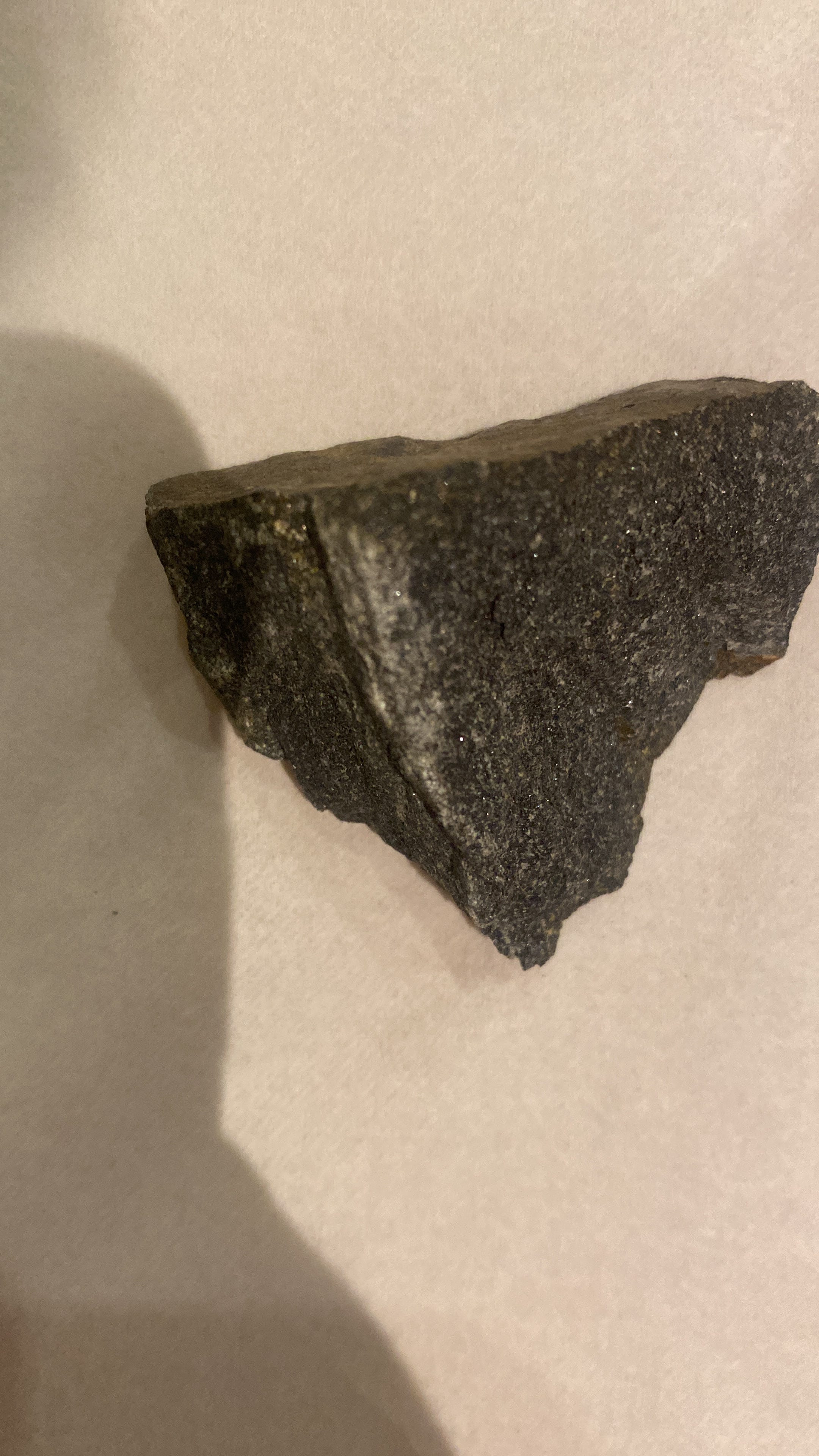
I got olivine and then peridotite. (source: geosupplies.co.uk)
One interesting experiment with peridotite is that if you make it a powder and put it in water, it should go alkaline.
I bought olivine powder from a plant fertilisation store (Ecothrive olivine, milled ~120 µm, Mg 20% / Fe 2%) to see if I can recreate any alkaline effects in water.
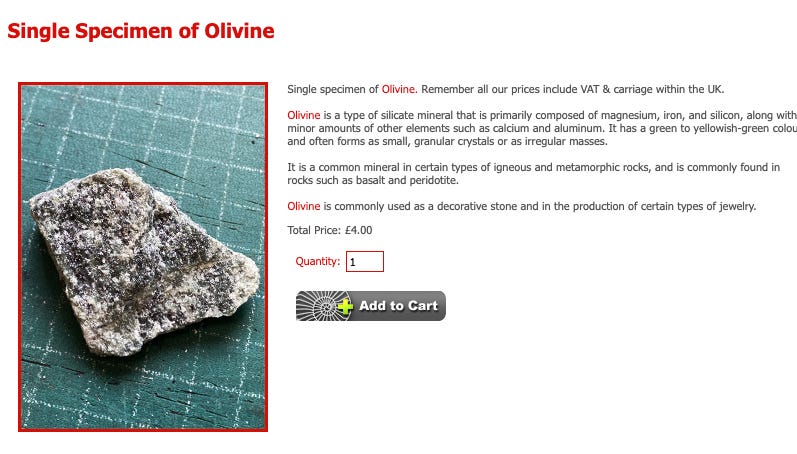
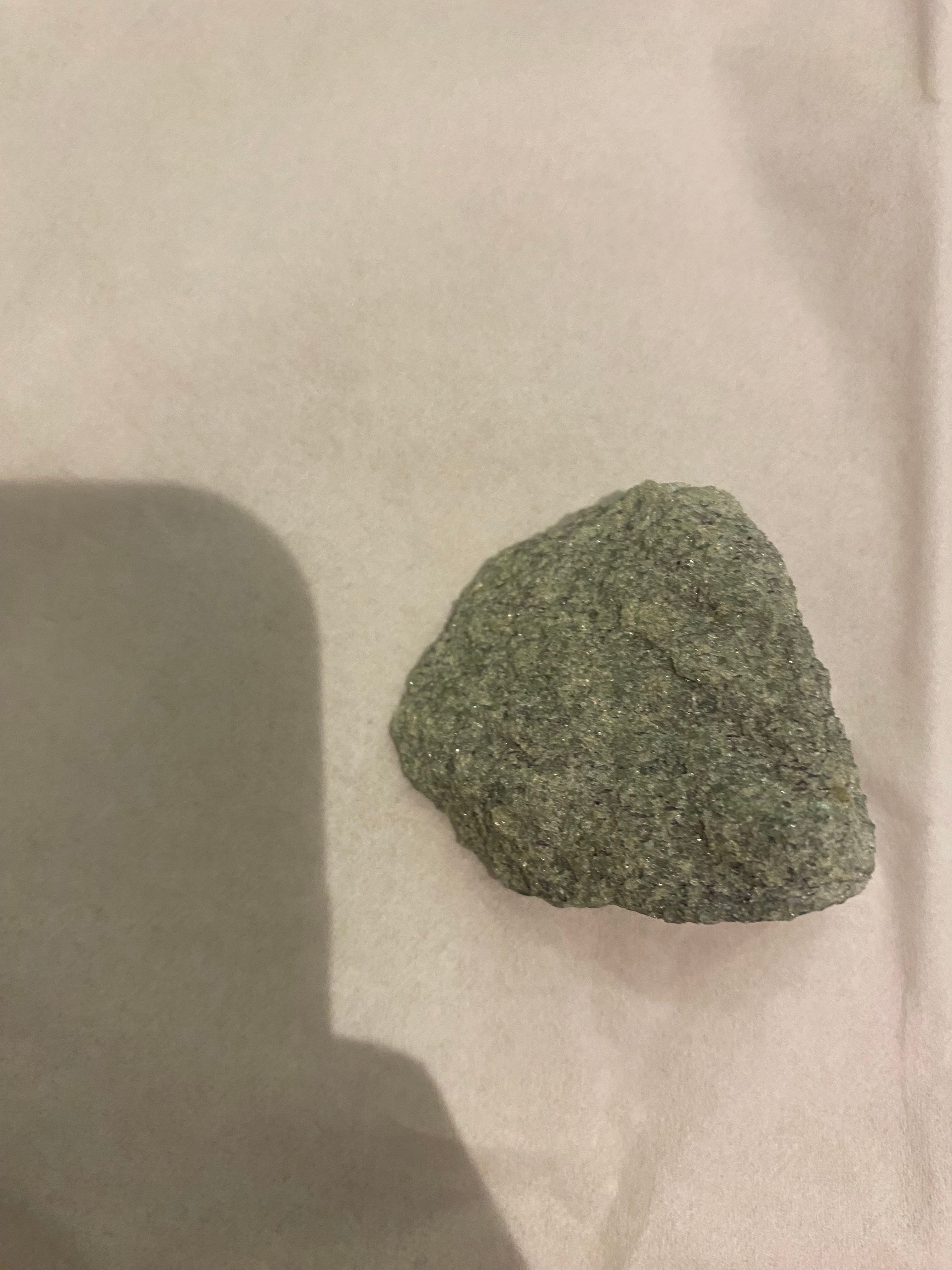
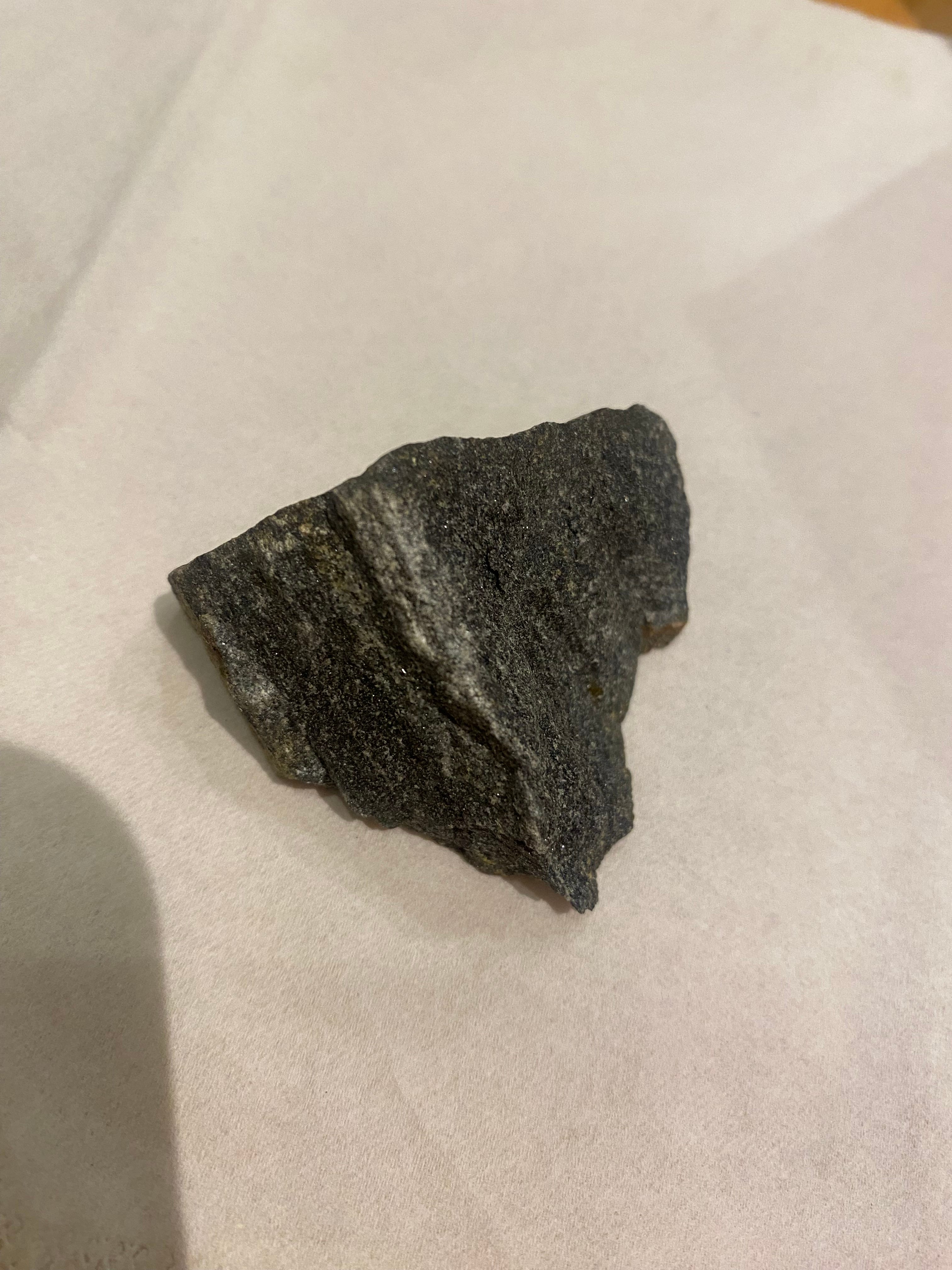
Here are some pictures of the stuff I got from the geo store (not an endorsement). Note that the olivine smells quite pleasant actually.
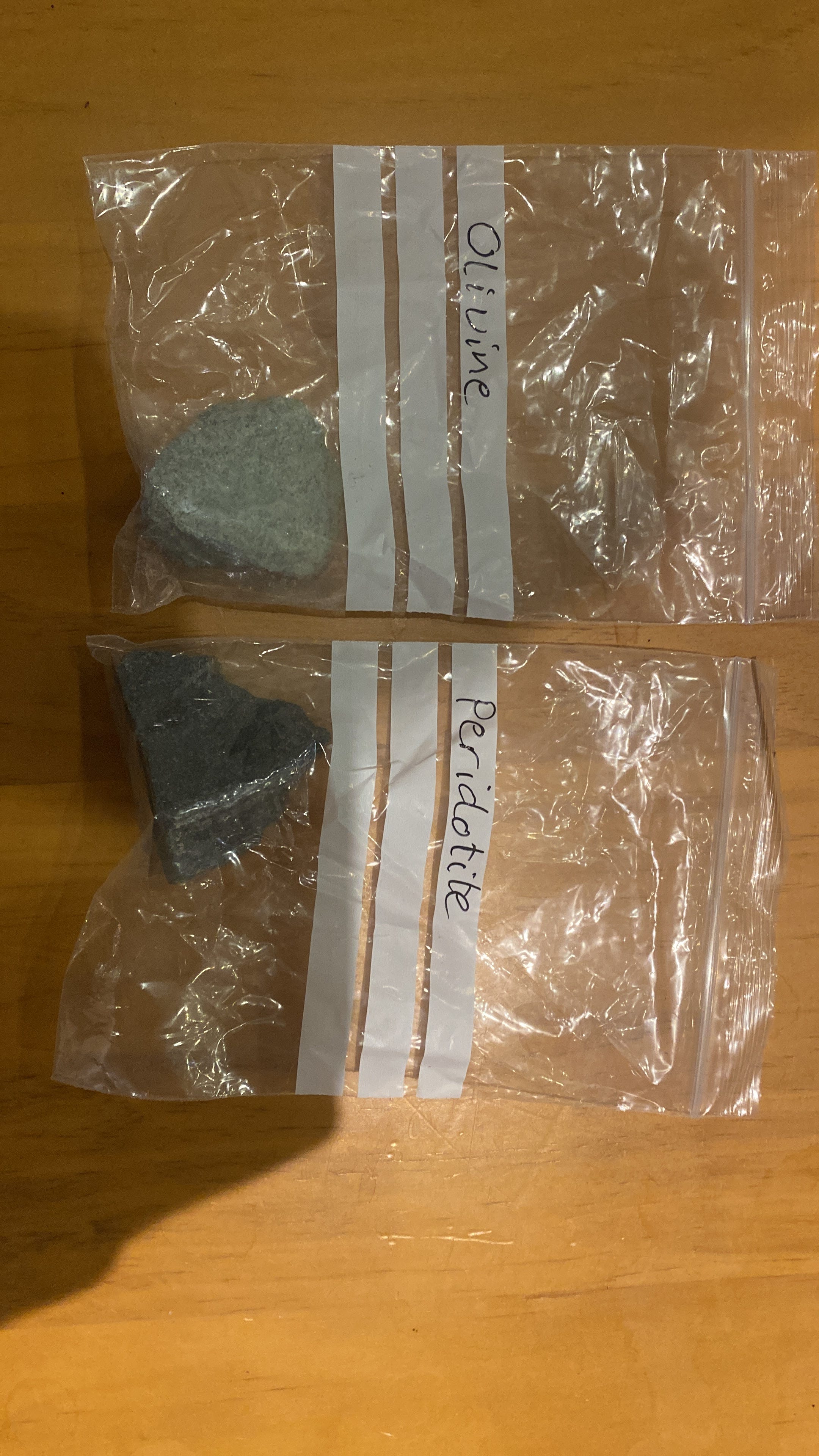
Olivine:
Peridotite:
References
Lane, N. & Martin, W.F. (2012), "The Origin of Membrane Bioenergetics", Cell 151(7), 1406–1416. DOI: 10.1016/j.cell.2012.11.050. Cell01438-9) · PDF01438-9.pdf) — chemiosmotic coupling, ion gradients, and Na⁺/H⁺ transporters traced to a geochemical origin.
Russell, M.J. & Hall, A.J. (1997), "The emergence of life from iron monosulphide bubbles at a submarine hydrothermal redox and pH front", Journal of the Geological Society 154(3), 377–402. DOI: 10.1144/gsjgs.154.3.0377. link — Russell & Hall at Glasgow; original FeS-membrane theory, life beginning at an iron-sulphide barrier across a redox + pH front.
~4.2 Ga; vent water ~150 °C; the ocean was Hadean.
Smith, E. & Morowitz, H.J. (2016), The Origin and Nature of Life on Earth: The Emergence of the Fourth Geosphere, Cambridge University Press. ISBN 9781107121881. DOI: 10.1017/CBO9781316348772. See [[Smith and Morowitz, The Origin and Nature of Life on Earth Ideas]].